Ethiopia Halts New Crypto Mining Power Deals to Prioritize Domestic Energy Needs

Addis Ababa – Ethiopia has moved to suspend the approval of any new electricity supply agreements for cryptocurrency mining operations, signaling a decisive shift in its energy policy to prioritize domestic consumption over the expansion of power-hungry digital mining.
Ethiopian Electric Power (EEP) CEO Ashebir Balcha announced the decision this week, stating that the nation’s current generation capacity cannot accommodate additional demand from crypto miners without jeopardizing supply for households and critical industries.
“Our focus is on meeting Ethiopia’s growing domestic electricity needs first, before expanding supply to energy-intensive activities such as digital mining,” Ashebir told reporters during the company’s annual performance briefing.
Crypto Mining’s Energy Footprint in Ethiopia
Ethiopia’s abundant hydropower resources and some of the lowest electricity tariffs in Africa have made it an attractive destination for global cryptocurrency miners, particularly as governments in China, Kazakhstan, and parts of North America crack down on the sector.
Currently, 25 crypto mining companies are operating in Ethiopia, with another 20 awaiting registration approval. In recent years, the government has leveraged “surplus power” sales to these operators in exchange for foreign currency—part of a broader strategy to boost hard-currency reserves and diversify export revenues.
However, with demand for electricity at home climbing rapidly due to population growth, industrialization, and rural electrification projects, officials are now recalibrating the balance between economic gains from crypto and the needs of domestic consumers.
Power Supply Breakdown
In the past fiscal year, EEP generated 25.18 terawatt-hours (TWh) of electricity, earning 75.4 billion birr in total revenue. Of this, 74.05 billion birr came from electricity sales, with the remainder from related services.
Consumption was distributed as follows:
- 60% supplied to domestic consumers
- 27% to data (crypto) mining companies
- 6% to industrial users
- 5% exported to Kenya
- 2% exported to Djibouti
Electricity exports to neighboring Kenya, Djibouti, and Sudan generated $118 million in foreign exchange. Preliminary feasibility studies are also underway for potential exports to Somalia and South Sudan.
GERD Set to Transform Ethiopia’s Energy Landscape
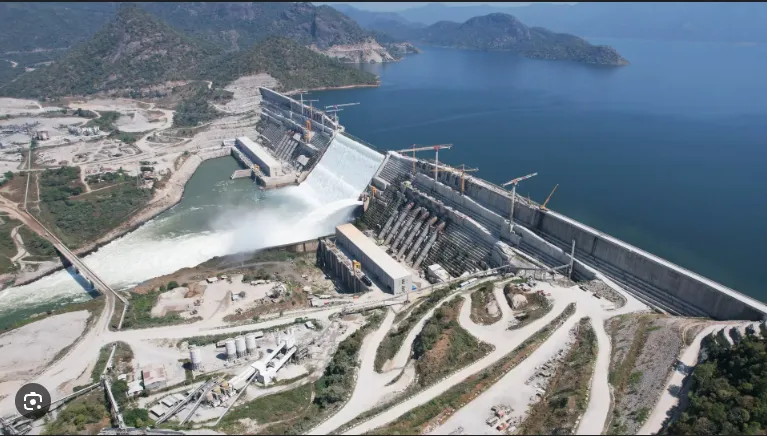
Ethiopia’s export ambitions are expected to accelerate with the imminent inauguration of the Grand Ethiopian Renaissance Dam (GERD), Africa’s largest hydropower project.
The $5 billion dam, with a generation capacity exceeding 5,000 megawatts, is now in its final stages of completion and is slated for official launch within a month. Once fully operational, GERD will significantly expand Ethiopia’s generation capacity, potentially enabling the country to meet both domestic needs and export commitments without compromising supply.
EEP CEO Ashebir emphasized that Ethiopia is already the continent’s leading hydropower producer, and GERD will further cement the nation’s position as a regional energy hub.
“Our hydropower advantage positions us to play a central role in powering East Africa’s growth,” he said.
Balancing Growth and Energy Security
While cryptocurrency mining has offered Ethiopia a valuable source of foreign exchange, the latest policy shift reflects a growing recognition of energy security as a strategic priority. Analysts say the government’s decision underscores the challenge of balancing short-term revenue generation with long-term infrastructure and development needs.
With the GERD set to boost capacity in the coming months, Ethiopia may revisit crypto mining approvals in the future—but for now, the message from Addis Ababa is clear: energy for Ethiopians comes first.

About Addis Insight
Addis Insight is Ethiopia’s fastest growing digital news platform, providing consumers with the latest news from Ethiopia and its diaspora. We provide marketers with innovative opportunities to leverage our stories and overall brand with a fiercely curious and highly engaged audience.